Spanish Cuisine Food: 5 Incredible Levels From Tapas to Michelin-Star Dining
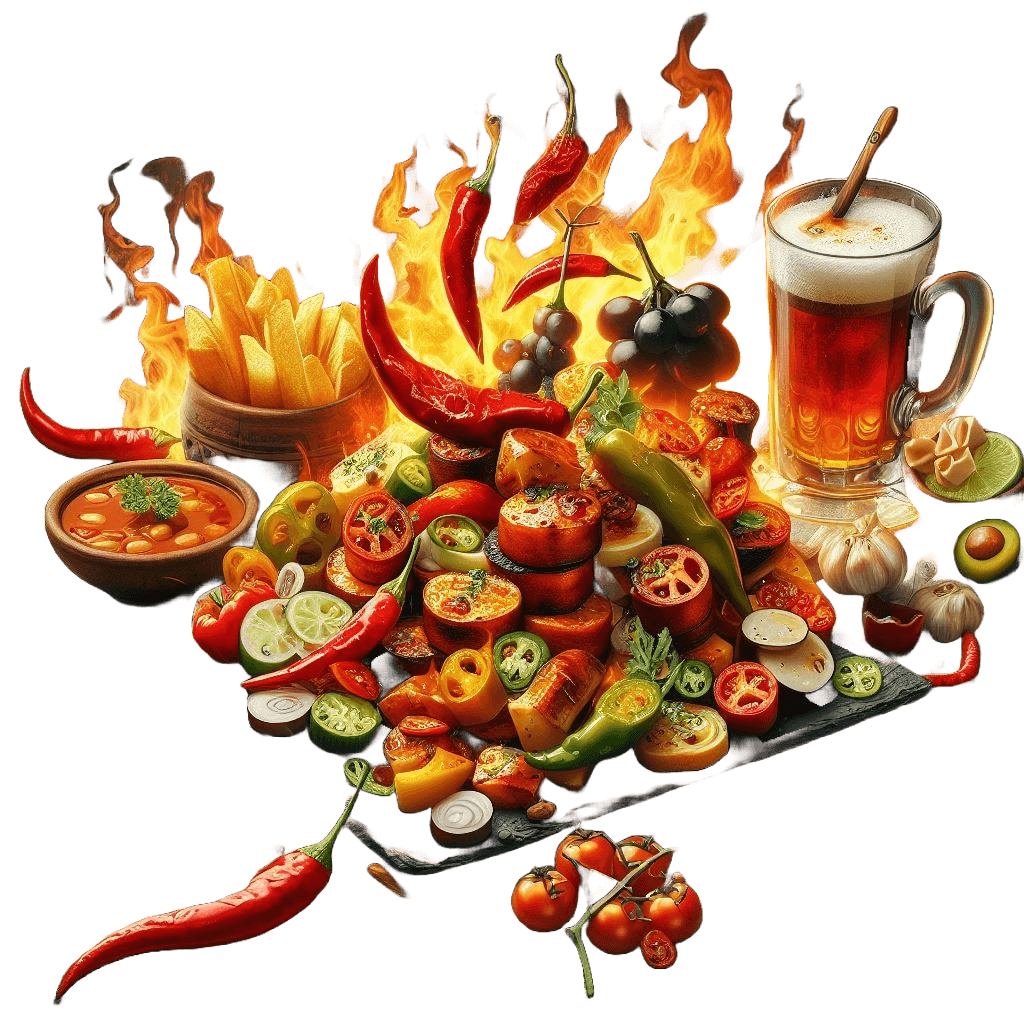
Spanish food isn’t a single style—it’s a layered system of eating that moves from street-level snacks to some of the most advanced fine dining in the world. If you look at Spanish cuisine food properly, it’s not just about dishes, but about hierarchy: what you eat casually, what you share socially, and what you experience as a planned culinary event.
This guide ranks Spanish cuisine food from the most everyday formats (tapas culture) all the way to Michelin-starred tasting menus, so you can understand how Spain actually eats—not just what it serves tourists.
Level 1: Tapas — the foundation of Spanish cuisine food
At the base of Spanish cuisine food sits tapas. This is not a dish—it’s a system of eating. Tapas are small plates meant for sharing, grazing, and moving. They are designed for social rhythm rather than structured meals. You don’t “order tapas dinner” in the traditional sense; you build it as you go.
Common examples include:
- patatas bravas
- croquetas
- pan con tomate
- boquerones (anchovies)
- olives and conservas
What makes tapas the foundation of Spanish cuisine food is flexibility. You can have one plate with a drink or build an entire evening around them.
Level 2: Pintxos & regional street culture
A step above casual tapas in structure—but still informal—are pintxos, especially in northern Spain. Unlike tapas, pintxos are often pre-prepared and displayed on counters. You choose visually, usually paying per item. It’s a fast, bar-centric interpretation of Spanish cuisine food.
The key difference here is control: instead of ordering from a menu, you navigate a visual display of food already prepared.
Level 3: Traditional Spanish home-style restaurants
This is where Spanish cuisine food becomes more structured.
These restaurants focus on regional cooking passed down through generations:
- slow-cooked stews
- grilled meats
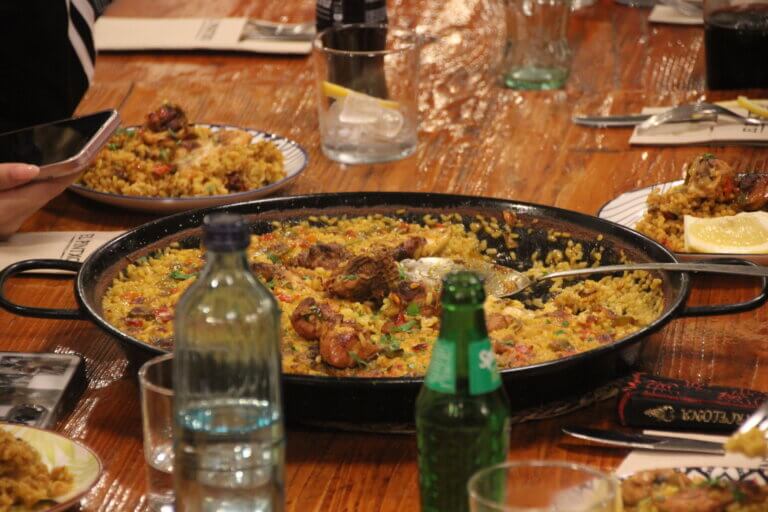
- seafood rice dishes
- seasonal vegetables
- rustic desserts
Think of dishes like:
- cocido madrileño
- fabada asturiana
- suquet de peix (Catalan fish stew)
- tortilla española (as a full plate, not a tapa)
This level of Spanish cuisine food is less about sharing plates and more about complete meals. It’s where you sit down properly, order courses, and follow a traditional rhythm.
Level 4: Modern Spanish gastro-bars
Gastro-bars take traditional dishes and reinterpret them with modern technique. You still recognize the ingredients, but the execution is more refined and experimental. Typical characteristics:
- small-plate tasting menus
- creative plating
- fusion of traditional + modern techniques
- strong focus on presentation and wine pairing
This is where chefs start to treat Spanish cuisine food as a creative language rather than a fixed tradition. Cities like Barcelona are especially strong in this category, with restaurants that sit between tapas bars and fine dining.
Level 5: Michelin-star Spanish cuisine food
At the top of the hierarchy is Michelin-level dining, where Spanish cuisine food becomes highly technical and conceptual. Here, the goal is not just flavour—it’s experience design. Dishes are constructed using advanced culinary science: temperature control, texture layering, deconstruction, and multi-sensory presentation.
Typical features include:
- tasting menus only (no à la carte)
- long dining experiences (2–4 hours)
- extreme precision in plating and technique
- storytelling through courses
Restaurants at this level often redefine what people think Spanish cuisine food even is, pushing it far beyond traditional cooking.
Where tapas still dominate everything
Even at the highest levels, tapas culture remains the backbone of Spanish cuisine food. Many Michelin chefs actually began in tapas or small-plate environments before moving into fine dining.
This is what makes Spain unique: there is no clean separation between casual and elite food culture. A dish inspired by a croqueta can appear in both a neighbourhood bar and a Michelin restaurant but executed differently.
The real hierarchy of Spanish cuisine food
If we simplify the structure, Spanish cuisine food looks like this:
- Casual level: tapas, pintxos, bar snacks
- Traditional level: regional home cooking
- Modern level: gastro-bars and creative kitchens
- Elite level: Michelin-star tasting menus
But unlike many countries, these levels constantly overlap in Spain. A single evening can move between two or three of them without feeling unusual.
Final thoughts
Understanding Spanish cuisine food is less about memorizing dishes and more about understanding structure. It’s a food culture built on movement—from small plates shared at a bar to highly curated tasting menus designed for long, immersive dining. The ranking system isn’t rigid. It’s fluid, and that’s exactly what makes Spanish food culture so strong.
Whether you start with tapas in a crowded bar or end up at a Michelin-starred restaurant, you’re still operating inside the same culinary ecosystem—just at different intensities of expression.