Cochinillo: 7 Irresistible Reasons This Legendary Spanish Roast Is Unforgettable
Few dishes in Spain inspire the same reverence as cochinillo. Served whole, its skin golden and blistered, the meat impossibly tender beneath a crackling crust, cochinillo is more than a roast — it is ceremony, heritage, and culinary precision distilled into a single dish.
For centuries, this milk-fed pig has defined celebratory dining in Castile. Today, travelers cross the country for the experience of tasting authentic cochinillo, especially in the historic city of Segovia, where the tradition reaches its highest expression. If you want to understand Spain beyond tapas and paella, you start with cochinillo.
What Exactly Is Cochinillo?
In Spain, cochinillo refers specifically to a suckling pig that is:
- Between two and three weeks old
- Fed exclusively on its mother’s milk
- Weighing approximately 4–6 kilograms
Because the animal has not consumed solid food, the meat remains pale, delicate, and subtly sweet. The muscle fibers are underdeveloped, which results in extraordinary tenderness once roasted.
Unlike standard roast pork, cochinillo relies on youth and purity rather than marinades or heavy seasoning. The ingredient itself is the luxury.
Why Cochinillo Is So Famous in Segovia
Although cochinillo appears throughout Spain, it is most closely associated with Segovia, a medieval city northwest of Madrid known for its Roman aqueduct and centuries-old roasting ovens.
Segovia’s dry climate and traditional wood-fired ovens create ideal conditions for roasting. Generations of asadores (roast masters) have refined the technique to near perfection. One of the most iconic establishments is Mesón de Cándido, where cochinillo is famously cut with the edge of a plate instead of a knife — a theatrical gesture meant to prove how tender the meat truly is.
This ritual has become synonymous with authentic cochinillo.
The Secret Behind Perfectly Crispy Skin
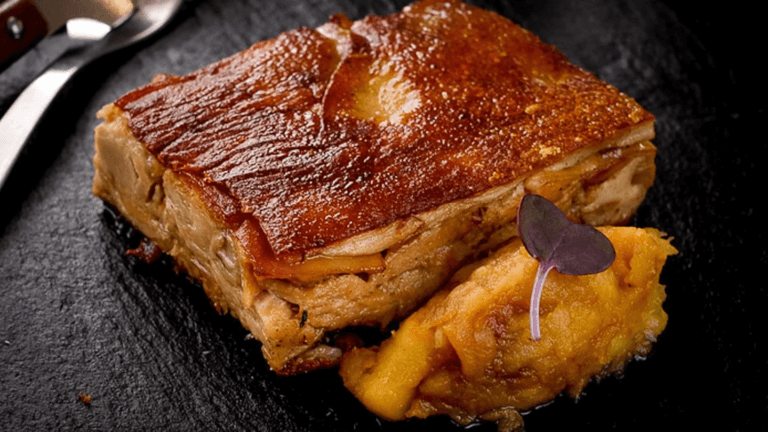
The defining feature of exceptional cochinillo is its skin. It must be glass-like, brittle, and evenly golden — never rubbery, never burnt. Traditional preparation is surprisingly minimalist. The pig is seasoned only with salt and a small amount of water. No herbs. No marinades. No complicated rubs.
The roasting process happens in stages. First, the cochinillo is placed skin-side down to gently cook the interior. Later, it is turned skin-side up and exposed to steady, dry heat. The lack of moisture allows the skin to dehydrate slowly before crisping into crackling. Wood-fired ovens fueled by oak provide consistent radiant heat, which helps render fat gradually without drying the meat. Timing and temperature control are everything.
The result is dramatic contrast: shattering skin over buttery-soft flesh.
Texture: The True Luxury of Cochinillo
What elevates cochinillo above other roast pork dishes is its texture. The meat is almost creamy in softness. Because the pig is milk-fed and so young, there is minimal connective tissue to break down. The fibers separate effortlessly, yet remain juicy.
When you take a bite of properly roasted cochinillo, you experience two sensations at once: crispness and silkiness. This contrast is what makes the dish unforgettable. It is a study in restraint — simple ingredients, executed flawlessly.
A Dish of Celebration and Status
Historically, cochinillo was reserved for special occasions. Its preparation required time, skill, and access to livestock, making it a dish associated with feasts and gatherings.
Even today, Spaniards often order cochinillo for:
- Family celebrations
- Christmas meals
- Weddings
- Important milestones
Serving cochinillo signals abundance and tradition. It is not everyday food; it is ceremonial.
How Cochinillo Is Traditionally Served
Authentic cochinillo is typically presented whole or halved before being portioned. It is often accompanied by simple roasted potatoes or a light salad — sides designed not to compete with the main attraction.
The wine pairing is equally important. Bold reds from Ribera del Duero are a classic choice, their structure balancing the richness of the pork while enhancing its savory depth. There are no heavy sauces. Adding gravy would be considered unnecessary. The crackling must remain crisp, and the flavor must remain pure.
Why Cochinillo Differs from Other Roast Pork
Many cultures roast pork, but cochinillo stands apart for several reasons. First, the age of the animal is strictly defined. Standard roast pork comes from mature pigs, which have denser muscle and stronger flavor. Cochinillo, by contrast, is delicate and refined.
Second, Spanish technique emphasizes dry heat and minimal seasoning. In other traditions, herbs, spices, or marinades dominate. With cochinillo, intervention is minimal. Finally, presentation matters. The carving ritual, the audible crackle of the skin, and the visual impact of the golden roast contribute to the experience.
Cochinillo is as much performance as it is cuisine.
Can You Try Cochinillo Outside Segovia?
While Segovia remains the spiritual home of cochinillo, excellent versions can be found in Madrid and other parts of Castile and León. Traditional asadores across Spain maintain the wood-fired method.
However, authenticity depends on sourcing. True cochinillo must be milk-fed and properly sized. Substituting older pork changes the texture entirely. If you are seeking the definitive experience, dining in Segovia remains unmatched.
Why Cochinillo Endures
In a modern culinary landscape filled with innovation and fusion, cochinillo endures because it represents something timeless: ingredient purity and technical mastery. It does not rely on trends. It does not need reinvention. Its success depends on precision, patience, and respect for tradition.
When done correctly, cochinillo embodies the essence of Spanish gastronomy — bold yet restrained, simple yet refined.
Final Thoughts
To taste authentic cochinillo is to participate in centuries of Spanish culinary history. From wood-fired ovens in medieval cities to contemporary Spanish dining rooms, the dish remains a symbol of celebration and craftsmanship.
Crisp skin. Tender meat. Minimal seasoning. Maximum impact. If you are exploring Spain through its food, cochinillo is not optional — it is essential.