Gothic Quarter Barcelona: 9 Hidden Food Spots Locals Love in the Old Town
If you search for Gothic Quarter Barcelona, you’ll quickly find the same pattern repeated: crowded plazas, overpriced tourist menus, and restaurants designed more for foot traffic than flavour. But that version of the Old Town is only half the story. Behind the souvenir shops and selfie-heavy squares, the Gothic Quarter still holds a quieter food culture—places where locals actually return, where menus are shorter, service is sharper, and food feels rooted in Catalan rhythm rather than tourism cycles.
This guide to Gothic Quarter Barcelona focuses on exactly that: real eating spots, not staged ones.
Understanding the food reality of Gothic Quarter Barcelona
The Gothic Quarter Barcelona food scene is shaped by contrast. On one side, you have high-volume tourist restaurants competing on visibility rather than quality. On the other, you have small, tightly run kitchens that survive on repeat customers, not one-time visitors. Locals tend to avoid the main arteries like La Rambla-adjacent streets for everyday dining. Instead, they drift toward narrower alleys, quieter plazas, and family-run counters where menus don’t change every season for Instagram.
To eat well in Gothic Quarter Barcelona, you’re not looking for spectacle—you’re looking for restraint.
El Pintxo de Petritxol: a repeat-return favourite
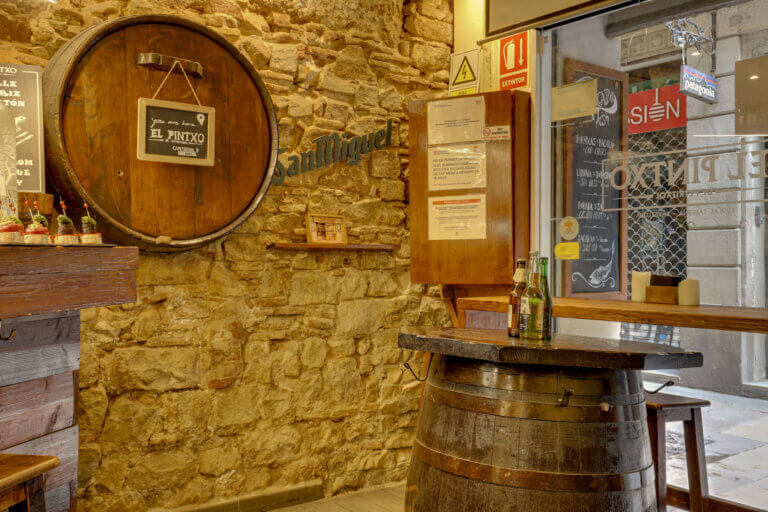
El Pintxo de Petritxol is one of those rare places in the Gothic Quarter Barcelona orbit that earns genuine repeat visits rather than one-off curiosity. Tucked into the historic Carrer de Petritxol, it operates with a pintxo counter model inspired by Basque tradition: small bites lined up along the bar, chosen individually, creating a flexible and informal way of eating. What makes it stand out in the Gothic Quarter Barcelona food landscape is its rhythm. There’s no rush to push tourists through, but there’s also no unnecessary performance. You pick, you eat, you return to the counter. It’s simple, but precisely executed. For many locals working in or around the Old Town, it becomes a reliable stop rather than a “special occasion” restaurant. That repeat-customer dynamic is exactly what separates it from most of the surrounding area.
Hidden bodegas and narrow-bar dining culture
One of the defining traits of Gothic Quarter Barcelona is its bodega culture—small, often dimly lit spaces serving wine, vermouth, cured meats, and simple hot plates. These places don’t advertise aggressively. They rely on consistency. A good bodega in Gothic Quarter Barcelona will often have a handwritten menu, a few daily specials, and a crowd that skews more local than tourist.
You’ll find dishes like pan con tomate, anchovies, grilled sardines, and slow-cooked stews served without ceremony. The appeal isn’t innovation but stability.
Avoiding the obvious traps in Gothic Quarter Barcelona
The biggest mistake visitors make in Gothic Quarter Barcelona is assuming visibility equals quality. Restaurants with large terraces facing major squares often rely on high turnover rather than culinary precision.A useful rule in Gothic Quarter Barcelona: if a menu is translated into five languages and displayed on a laminated board outside, pause before committing.
Local rhythm: how people actually eat here
Eating in Gothic Quarter Barcelona isn’t structured like formal dining districts. Locals tend to snack, move, and return rather than sit for long multi-course meals every time. You’ll often see patterns like:
- mid-morning coffee in a quiet square
- late lunch in a small bodega
- early evening pintxos or tapas-style grazing
- late wine stop before heading home
This fluid approach explains why places like El Pintxo de Petritxol work so well—they match the rhythm rather than forcing a formal structure.
What makes a place “local-approved” in Gothic Quarter Barcelona
In Gothic Quarter Barcelona, “local-approved” isn’t about Michelin stars or online visibility. It’s about repetition and restraint.
A restaurant earns that status when:
- the menu stays relatively stable
- the pricing feels consistent year-round
- service doesn’t change tone depending on tourists
- regulars are visible even during peak hours
These signals matter more than branding when navigating the Gothic Quarter Barcelona food scene.
Where Gothic Quarter Barcelona food overlaps with El Born
While the focus here is Gothic Quarter Barcelona, it’s impossible to ignore its overlap with El Born. The two districts blend at the edges, and locals often move between them without thinking about boundaries.
El Born tends to feel slightly more modern and design-forward, while Gothic Quarter Barcelona retains a denser, more historical texture. But food culture flows between both, especially in small wine bars and pintxo-style venues.
Final thoughts: eating well in Gothic Quarter Barcelona
The reality of Gothic Quarter Barcelona is that great food exists—but it’s not always where you first expect it to be.
Places like El Pintxo de Petritxol capture that idea well: unpretentious, repeatable, and integrated into daily life rather than tourist cycles. And that’s ultimately what defines the best way to eat in Gothic Quarter Barcelona—not chasing trends, but finding the places you’d actually return to.