Chicken Paella vs. Seafood Paella: 5 Irresistible Reasons to Choose Your Favorite
Paella is more than just a dish—it’s a national symbol, a culinary ritual, and a delicious debate waiting to happen. And if there’s one question that divides Spanish families, travelers, and foodies alike, it’s this: chicken paella or seafood paella?
While seafood paella may steal the spotlight in seaside restaurants, chicken paella has deep roots in the countryside. Both versions deliver bold, satisfying flavors—but which one deserves the crown?
The Origins: Land vs. Sea
Paella originated in Valencia, where rice, saffron, and local ingredients came together in shallow pans over open fires. But what went into those pans depended on where you were.
- Chicken paella (paella de pollo) traces back to the inland rice fields. It often included chicken, rabbit, green beans, and snails—whatever the farm and field offered. This rustic style is actually closer to what many Valencians consider the “original” paella.
- Seafood paella (paella de marisco), by contrast, emerged later in coastal towns. With access to shrimp, mussels, clams, and squid, fishermen adapted the dish to celebrate the flavors of the Mediterranean.
So which is more “authentic”? It depends on who you ask—but chicken paella is certainly the more traditional of the two.
Chicken Paella: Earthy, Savory, and Hearty
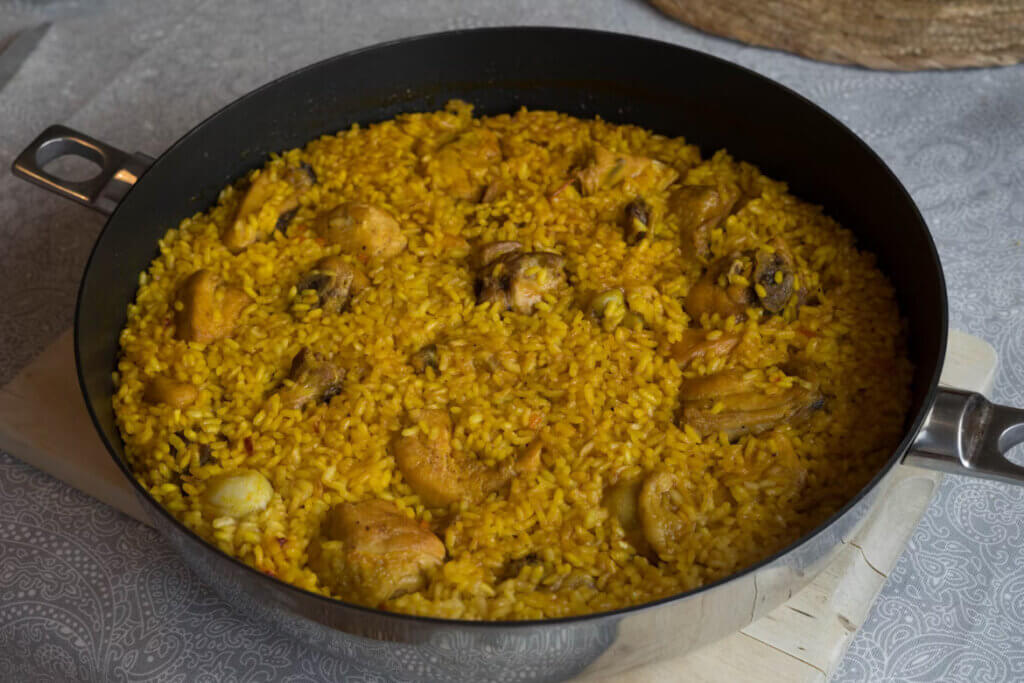
Chicken paella offers deep, meaty flavors and a comforting, hearty experience. The richness of the poultry marries beautifully with saffron-infused rice, and when cooked right, each bite delivers a balanced mix of protein, starch, and caramelized sofrito. What makes it special:
- Typically uses bone-in chicken thighs for maximum flavor.
- Often includes garrofó beans or artichokes, depending on the region.
- Builds complexity through slow-cooked sofrito of tomato, garlic, and paprika.
Seafood Paella: Light, Fragrant, and Coastal
Seafood paella is all about showcasing the ocean. It’s a visually stunning dish with pink prawns, black mussels, and sometimes calamari dotting the top like edible jewels. The flavors are lighter, more briny, and often elevated with a homemade fumet (seafood stock). What makes it special:
- Usually skips meat and focuses entirely on shellfish.
- Leans on the freshness of the seafood—nothing frozen!
- Typically made with Bomba rice to soak up rich broth without becoming mushy
Pro tip: Add the seafood near the end of cooking so it stays tender. Overcooked prawns are the fastest way to ruin a paella!
Key Differences at a Glance
Chicken paella and seafood paella differ in origin, ingredients, and flavor. Chicken paella hails from inland Valencia, featuring hearty ingredients like chicken or rabbit, slow-cooked sofrito, and an earthy, meaty flavor — often paired with red wine and rustic bread. In contrast, seafood paella comes from Mediterranean coastal towns, showcasing shrimp, mussels, and squid in a fragrant seafood stock, offering a light, briny taste best enjoyed with white wine and lemon wedges.
What About a Mix?
Here’s where things get spicy—literally. Mixed paella (paella mixta) combines chicken and seafood in one pan. While it’s popular among tourists, many Valencians see it as a non-traditional mashup. Still, when done well, the combination of land and sea can be spectacular.
So if you can’t choose between chicken paella and seafood paella, why not embrace the best of both worlds?
Which One Reigns Supreme?
There’s no definitive winner in the battle between chicken paella and seafood paella—because each one shines in its own context. If you crave comfort and heartiness, go for chicken paella. If you want something lighter, elegant, and full of coastal flavor, seafood paella is the way to go.
But whichever you choose, remember: the secret is in the rice, the stock, and the love you put into the pan. Buen provecho!